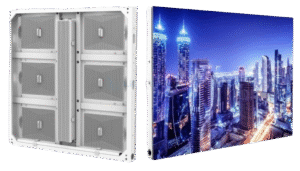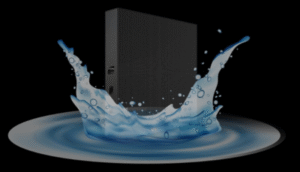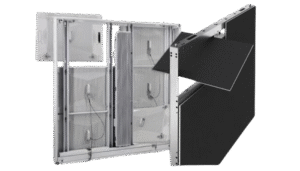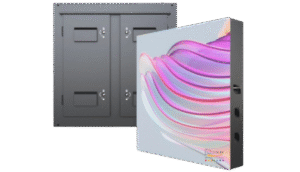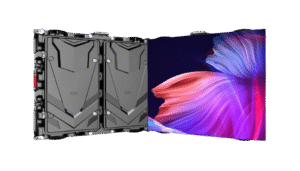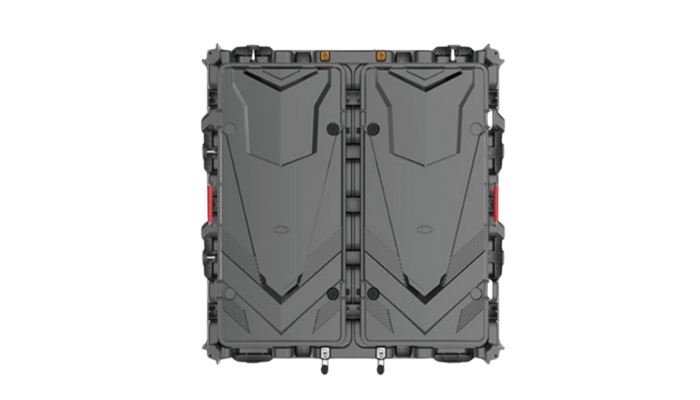
In the midst of rapid urban development, cities are transforming into open galleries of technology and design. Outdoor advertising screens are no longer just a means to convey messages—they have become an integral part of the aesthetic fabric of buildings and public spaces. In this context, outdoor LED screens with Die-Cast Aluminum cabinets offer a unique blend of superior performance and modern appearance, making them the ideal choice for projects that demand a seamless fusion of technology and architectural beauty.
Where Art Meets Engineering: The Elegance of Die-Cast Aluminum
What distinguishes die-cast aluminum cabinets is not only their lightness and durability but also their ability to achieve unprecedented precision that adds a refined aesthetic to the entire screen. This precision enables:
-
Perfectly Matched Units: Each panel is cast with exceptional accuracy, ensuring all screen modules fit together flawlessly. This perfect alignment eliminates gaps or inconsistencies when assembling the screen, resulting in a smooth and unified display surface—like a piece of art.
-
Virtually Invisible Seams: Thanks to high-precision manufacturing, the joints between panels are almost invisible from standard viewing distances, enhancing image clarity and seamless content flow with no visual distractions.
-
Slim and Stylish Profile: The properties of aluminum allow for thinner, sleeker panels compared to traditional iron structures, giving the screen a more elegant side profile that integrates more naturally with modern building facades.
This combination of precision and lightweight design grants designers and architects greater freedom to incorporate LED screens as central design elements, rather than merely functional additions.
Sustainable Performance: Efficient Cooling and Longer Lifespan
One of the core advantages of die-cast aluminum is its superior heat dissipation capability. LED modules generate heat during operation, and in outdoor environments, this heat is often exacerbated by direct sunlight and high ambient temperatures—especially in places like Ismailia during summer. Aluminum, being an excellent thermal conductor, contributes to:
-
Maintaining Optimal Operating Temperature: Effective cooling ensures that internal screen components are protected from overheating, preventing damage.
-
Extending the Lifespan of LED Units: Excessive heat is one of the main factors behind LED performance degradation and reduced lifespan. Proper cooling helps LEDs operate more efficiently and last longer, reducing maintenance and replacement costs.
-
Reducing Power Consumption: When components run at optimal temperatures, they consume energy more efficiently, lowering long-term operational costs.
Beyond Advertising: A New Urban Vision with Outdoor LED Screens
Thanks to these features, die-cast aluminum LED screens have gone beyond traditional billboard usage. They are now used for:
-
Architectural Video Walls: Transforming entire building facades into dynamic digital displays that showcase digital art or animated patterns, adding a modern touch to cityscapes.
-
Interactive Public Displays: Installed in public squares or parks where audiences can engage with the displayed content.
-
Decorative Lighting Elements: Providing dynamic, customizable lighting effects that align with various events or moods.
-
Major Events and Installations: Where fast assembly, easy disassembly, and unmatched display quality are essential.
Conclusion
The outdoor LED screen with die-cast aluminum cabinets represents a significant leap forward in display technology. It’s not just a screen—it’s an architectural enhancement that elevates urban beauty, delivers reliable long-term performance, and meets the highest standards of both design and functionality.